
Hemant Soren
President, JMM & Chief Minister of Jharkhand
Bariatu Road, Ranchi · Founded 1972
The Jharkhand Mukti Morcha grew out of decades of struggle for a separate tribal homeland — and today leads the state it helped create.
JMM was formed in 1972 by Binod Bihari Mahato, Shibu Soren and A. K. Roy, carrying forward a movement for a separate tribal-majority state that had been building since the 1950s. Its base has always been the Adivasi, Dalit and working communities of the Chhotanagpur plateau — miners, peasants and forest-dwellers whose land and livelihoods were being eroded by outside interests.
That struggle succeeded on 15 November 2000, when Jharkhand was carved out of Bihar — fittingly, on the birth anniversary of the tribal freedom fighter Birsa Munda. The movement's own rallying cry, Abua Disom, Abua Raj — "our land, our rule" — captured what three decades of organising had been aiming at. JMM has formed the state government multiple times since, and remains the anchor of the ruling coalition in Jharkhand today.
Beyond its elected representatives, JMM organises through a set of "morchas" — fronts aimed at specific communities, each meant to carry that group's concerns back into the party. As of the party's own past literature, there are ten:
Government and organised-sector employees
Farmers and agrarian communities
Youth wing
Student wing
Academics and professionals
Women's wing
Traders and business professionals
Lawyers and legal professionals
People displaced by mining, dams and industry
Dalit communities
At 18, having already lost his father to violence tied to local moneylenders, a young Shibu Soren founds the Santhal Navyuvak Sangh — his first organising effort.
JMM founded by Binod Bihari Mahato, Shibu Soren and A. K. Roy, uniting peasant, labour and student movements under one banner.
Shibu Soren is elected to the Lok Sabha from Dumka for the first time, after an unsuccessful bid in 1977.
Best Lok Sabha showing to date — six seats — as the demand for statehood gathered national attention.
Jharkhand becomes India's 28th state on 15 November, delivering the movement's founding demand.
Shibu Soren serves three terms as Chief Minister of Jharkhand.
Hemant Soren leads JMM-headed coalition governments through multiple terms as Chief Minister.
JMM joins the INDIA bloc at the national level, ahead of the 2024 general election.
The JMM-led alliance is re-elected in the Jharkhand Assembly polls; Hemant Soren is sworn in as Chief Minister once more.
Shibu Soren — Dishom Guru, founder and long-serving president — passes away on 4 August, aged 81. He is posthumously conferred the Padma Bhushan in 2026.
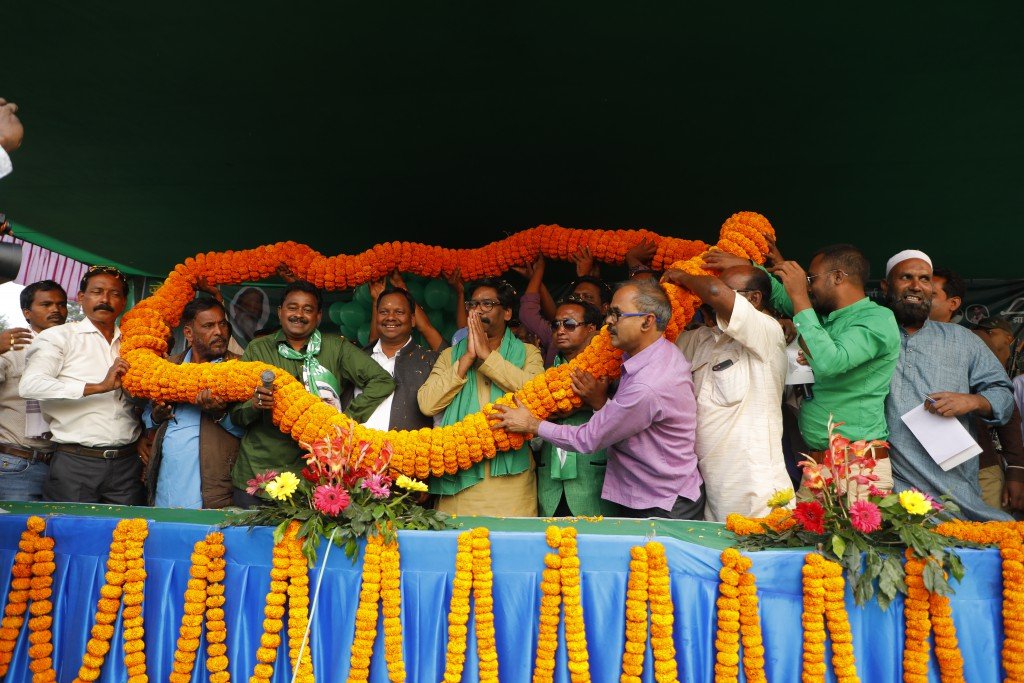
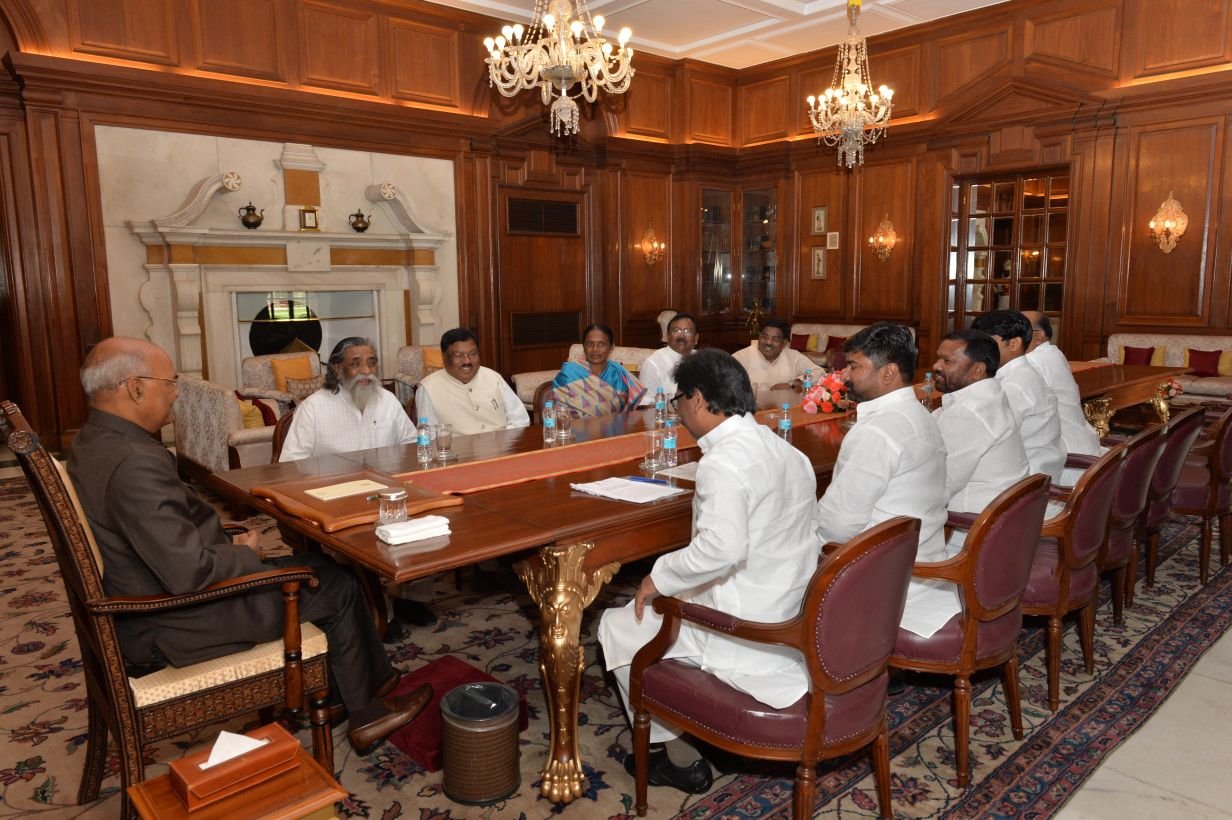
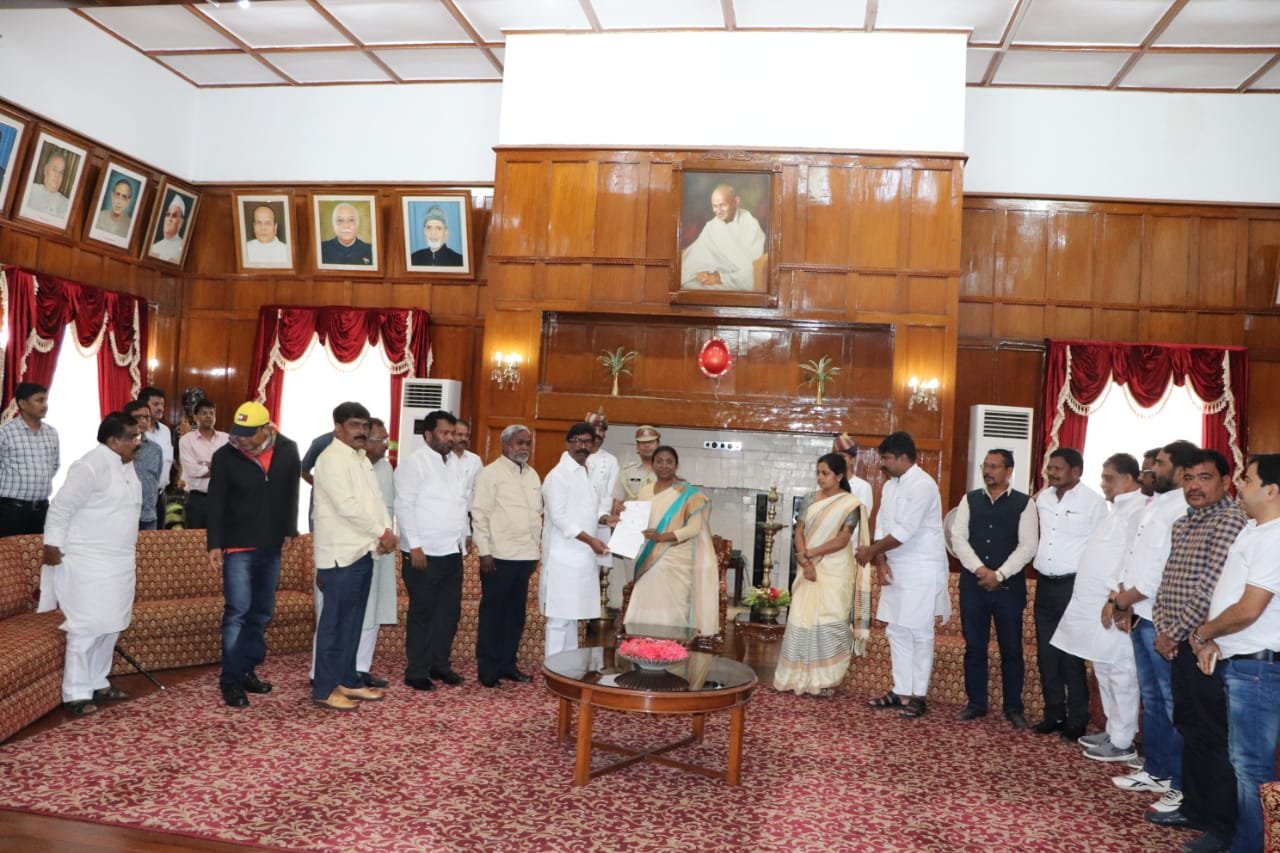
President, JMM & Chief Minister of Jharkhand
General Secretary
MLA & leading voice of the party's women's wing
Youth wing leadership
Leader, Lok Sabha
Leader, Rajya Sabha
In memory
Shibu Soren "Dishom Guru" · 1944 – 2025
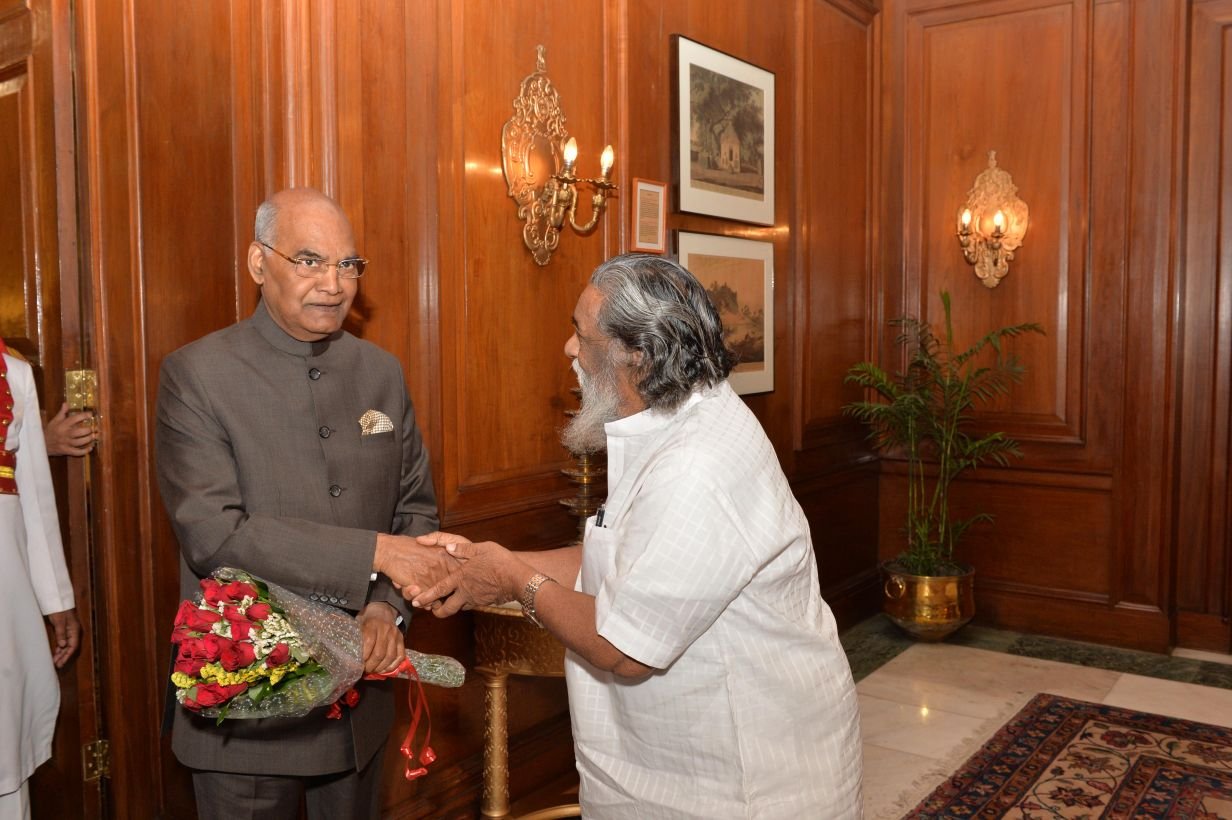
Co-founder and long-serving president of JMM, three-time Chief Minister of Jharkhand, and the figure most associated with the state's founding struggle. Born in Nemra village, Ramgarh district, in 1944, Soren lost his father to violence tied to local moneylenders as a young man — an event that shaped a lifelong campaign against exploitation of Jharkhand's tribal communities, alongside advocacy for education and against addiction.
Jharkhand Legislative Assembly seats
Lok Sabha seats
Rajya Sabha seats
Year founded
Protecting tribal land from unchecked acquisition and defending communities' claims over the forests they depend on.
Pushing for rural and tribal communities to get the same access to schooling, healthcare and employment as the rest of the state.
Safeguarding the languages, customs and self-governance traditions of Jharkhand's tribal communities.
Making the case that Jharkhand's mineral wealth should be managed transparently and for the benefit of its own people.
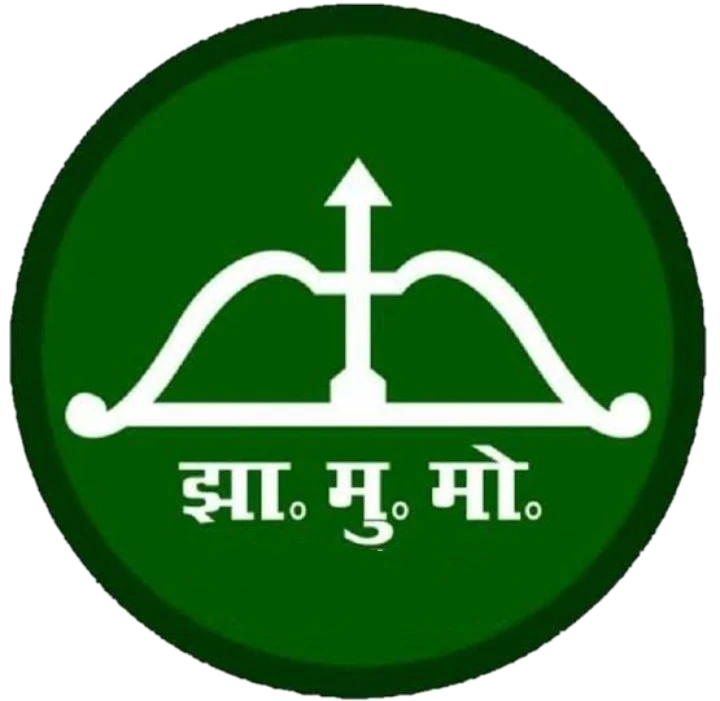
The bow and arrow — a tool of hunting and self-reliance across Jharkhand's tribal communities — has been JMM's election symbol since the party's earliest years, and remains one of the most recognisable symbols in Indian state politics.
Green, the party's colour, echoes the forests of the Chhotanagpur plateau that sit at the centre of much of JMM's politics — the same forests the party has long argued belong first to the people who live in them. The initials underneath the bow, झा॰ मु॰ मो॰, are simply the Devanagari short form of Jharkhand Mukti Morcha — the same shorthand English speakers get to with "JMM."
For anything to do with the party itself — membership, grievances, press queries — the Ranchi office is the right place, not this site. The details alongside are the party's own published contact points.